
10 tracks – Korg MS2000
Ten records shaped by the Korg MS2000 — spanning tech house, deep house and broken electronics, from acidic club tools to eerie digital atmospheres (2000–2006).

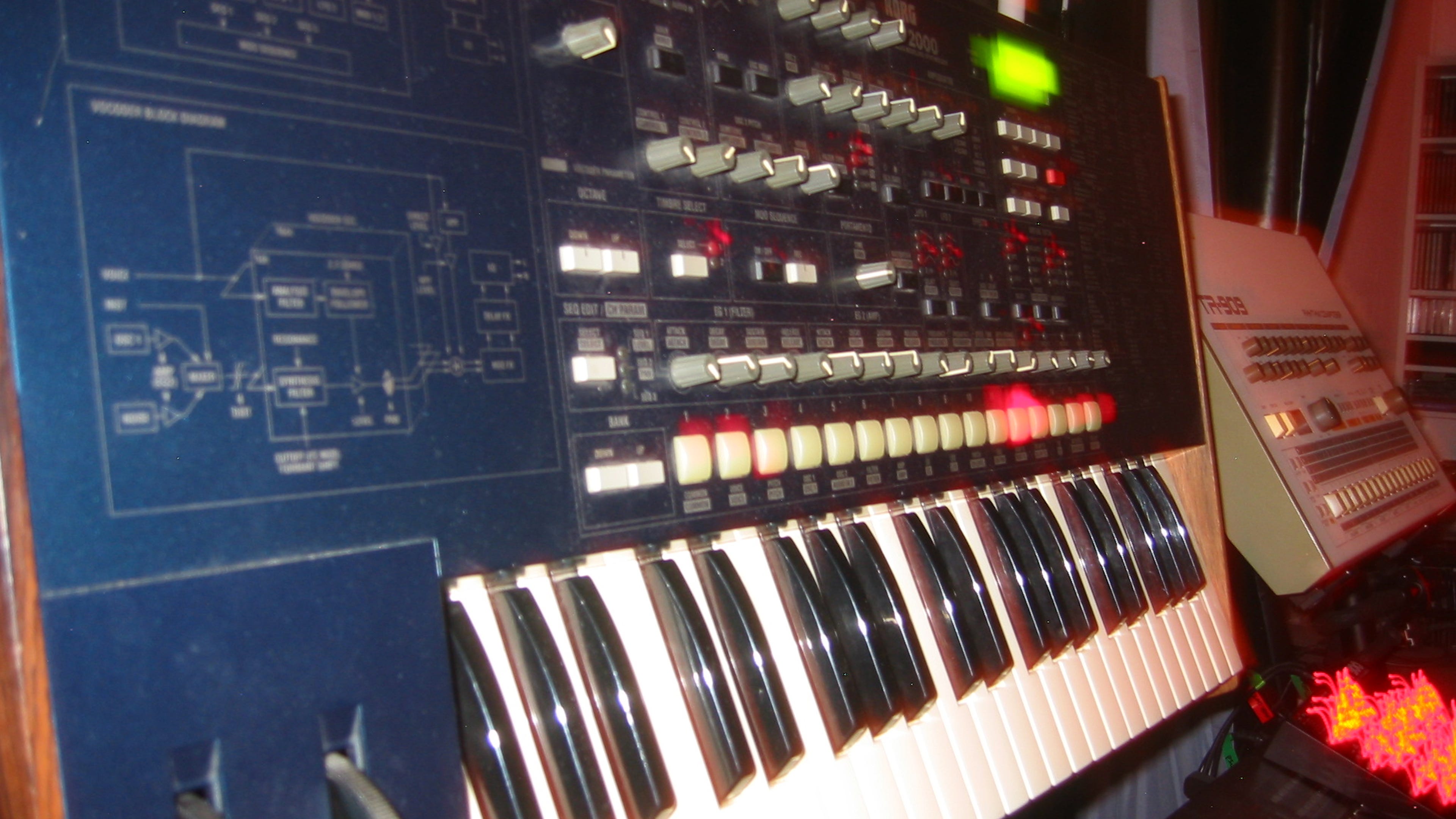
By the turn of the millennium, virtual analogue synthesis had firmly established itself.
The first wave of instruments had already proven there was demand for digital synths that captured some of the immediacy of analogue gear without the cost, maintenance or unpredictability of vintage hardware. Alongside units like the Access Virus, Nord Lead, Roland JP-8000 and Novation Supernova, Korg entered the space in 2000 with the MS2000 — a compact virtual analogue synth that acted as a modern digital descendant of the company’s earlier MS-10 and MS-20 machines. Borrowing the name, sloped-panel design and patchable spirit of those earlier instruments, it translated that ethos into something built for a different era.

Available in keyboard and rackmount forms — and later refreshed as the black-finished MS2000B — it wasn’t the most powerful synth in its class. Four voices of polyphony felt modest even then, and compared to some rivals there were instruments with greater raw horsepower. But the MS2000’s appeal was never really about specs.
It was about character.
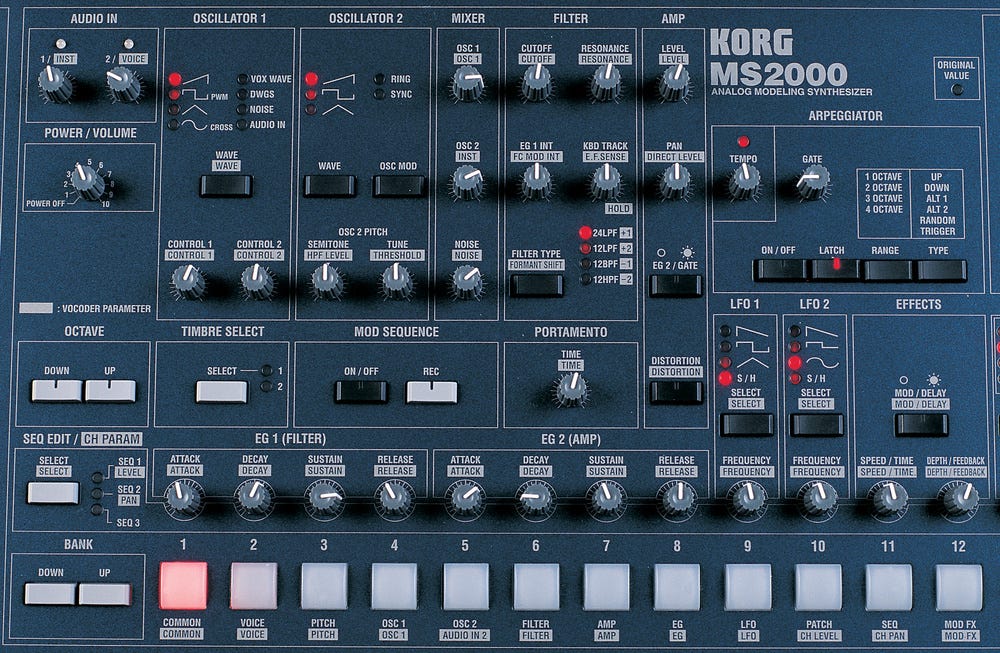
Where some virtual analogue synths leaned warm, smooth or conventionally “analogue”, the MS2000 often sounded sharper, colder and more overtly digital — particularly when pushed into basslines, acid sequences and synthetic textures. Its filter modes and onboard distortion gave sequences a brittle, aggressive edge, while dual oscillators, DWGS waveforms, noise and ring modulation made it equally capable of stranger territory.
A big part of that came from Korg’s Virtual Patch system — effectively a flexible modulation matrix built directly into the front panel — making it easy to route envelopes, LFOs, MIDI and performance controls across multiple destinations. But the real wildcard was the Mod Sequencer: a three-lane analogue-style step modulation system that brought evolving rhythmic movement and parameter sequencing directly into the synth itself, alongside a capable arpeggiator for more conventional pattern work.
The MS2000 also blurred the line between synth and processor. External audio could be routed directly into the synthesis engine itself — effectively becoming oscillator material — before being pushed through filters, envelopes, modulation and effects. Add a genuinely excellent 16-band vocoder, modulation FX, tempo-syncable delay and EQ, and it became something more experimental than many of its rivals: part synth, part mangling box, part performance tool.
Its limitations arguably became part of the appeal. The restricted polyphony meant it rarely handled lush, stacked harmonic arrangements, but that often worked in its favour. Pads felt lighter, atmospheres more skeletal, and supporting textures sat around the groove rather than dominating it. In sampler-led studios, that made it particularly useful — less an all-purpose workstation, more a character synth for movement, tension and edge.
While heavily adopted in underground electronic circles, the MS2000 also surfaced far beyond straightforward club music — appearing in setups associated with The Chemical Brothers, Röyksopp, Gorillaz and Trent Reznor of Nine Inch Nails, while its eerie digital character also found its way into the Metroid Prime soundtrack.
Across these tracks, that role becomes clear.
Here are 10 tracks released between 2000 and 2006 shaped by the sound and use of the Korg MS2000.
1️⃣ Blue - Pleasure [EVA005]
📅 Year: 2000
🇬🇧 Country: UK
📀 Label: Evasive Records
📦 Collection: Have 162 · Want 641
💰 Market: Median £21· Low £7 · High £50
🔗 Release: Blue (12) – Pleasure / Ausentia
💬 Notes:
Driving tech house from Rob Pearson and Sue McGuinness as Blue, recorded at Online Studios. Swung, conga-laced TR-909 drums and deep filtered chords lock the groove early, but it’s the rubbery acid movement and wobbling synth work that give the track much of its character. Rob had both keyboard and rack versions of the MS2000 in his setup at the time, making it a strong candidate here — particularly for the sharper, digital-edged bass work, where its aggressive filter modes and onboard distortion excelled.

2️⃣ Distant Strangers - Take Us In Deeper [DSEX002]
📅 Year: 2005
🇬🇧 Country: UK
📀 Label: Drugsex
📦 Collection: Have 167 · Want 779
💰 Market: Median £17 · Low £7 · High £75
🔗 Release: Distant Strangers – Virtual Morality
💬 Notes:
Stripped, heads-down UK tech house from Rob Pearson and Daniel Poli as Distant Strangers. Jacking shuffled drums, opening and closing hi-hat decays, trippy samples and a deceptively simple one-bar bassline keep the groove tightly wound, while the titular vocal eventually disappears into RE-201 dub space. As the arrangement opens out, the subtly shifting synth textures feel very much in MS2000 territory — exactly the kind of animated background movement its modulation matrix and mod sequencing handled particularly well.

3️⃣ Mr. G - Big Gal Batty Rider [PG028]
📅 Year: 2006
🇬🇧 Country: UK
📀 Label: Phoenix G
📦 Collection: Have 148 · Want 370
💰 Market: Median £17 · Low £7 · High £60
🔗 Release: Mr.G* – Nu Page E.P.
💬 Notes:
Classic Mr. G — loose, soulful and effortlessly functional. MPC2000XL drums, a rolling two-bar bassline, jazzy flourishes and sultry vocals unfold over eight minutes in that unmistakably jammed-out live style on a Mackie 24•8 mixer. Colin is well documented as a heavy MS2000 user, often building sounds on the synth before resampling them into the MPC, even claiming at one point that 80% of his sounds came from it. Given that workflow, it’s highly likely much of the melodic and synthetic material here started life on the Korg.

4️⃣ Tangun - No Gouge (Rob Pearson Remix) [Uhuru 009]
📅 Year: 2005
🇬🇧 Country: UK
📀 Label: Uhuru Beats
📦 Collection: Have 105 · Want 525
💰 Market: Median £23 · Low £1 · High £56
🔗 Release: Tangun – No Gouge
💬 Notes:
Rob Pearson’s remix of Tangun for Uhuru Beats — tightly engineered, club-focused UK tech house with exactly the kind of weight and clarity his productions consistently delivered. Percussion and vocal snippets fill the midrange while the groove does the heavy lifting, but the surrounding synth textures are what keep things evolving. Spacey sweeps, melodic FX and subtle movement point strongly toward the MS2000, whose modulation flexibility made it particularly good at generating this kind of restless synthetic detail.
5️⃣ Rob Pearson And Dave Luke - Data Flow [EVA006]
📅 Year: 2001
🇬🇧 Country: UK
📀 Label: Evasive Records
📦 Collection: Have 124 · Want 673
💰 Market: Median £30 · Low £5 · High £50
🔗 Release: Rob Pearson And Dave Luke – Breathe Easy / Data Flow
💬 Notes:
Warm, feel-good tech house from Rob Pearson and Dave Luke on Evasive. Sampled drums, a TX81Z Lately Bass, cheeky vocal chops and nostalgic chord work give the track its foundation, while synthetic strings and background textures add lift around the groove. This is exactly the kind of role the MS2000 often occupied — not necessarily the star of the record, but a dependable utility synth for atmosphere and movement, its relatively limited polyphony often making it better suited to lighter pads and supporting textures than dense harmonic work.

6️⃣ Rob Pearson - Vortex [OLC002]
📅 Year: 2000
🇬🇧 Country: UK
📀 Label: Online Collective
📦 Collection: Have 115 · Want 888
💰 Market: Median £44 · Low £19 · High £70
🔗 Release: Rob Pearson – Slipstream
💬 Notes:
Detroit-influenced UK tech house from Rob Pearson on Online Collective, the label arm of his Online Studios setup. Tight swung drums and a biting bassline provide the framework, while glassy chords, hook vocals and swirling textures gradually build tension before releasing back into the groove. The synthetic atmospherics feel like classic MS2000 material — slightly cold, slightly glassy and full of movement, sitting somewhere between melodic content and effects processing.
7️⃣ Dave Mothersole & Rob Pearson - Wanting You [DOR 046]
📅 Year: 2004
🇬🇧 Country: UK
📀 Label: Dorigen Music
📦 Collection: Have 135 · Want 693
💰 Market: Median £26 · Low £3 · High £58
🔗 Release: Dave Mothersole & Rob Pearson – Wanting You
💬 Notes:
Deep, driving tech house from Dave Mothersole and Rob Pearson that gradually mutates into something far more aggressive. A weighty kick, rolling sub, dubbed vocals and tightly pocketed percussion hold the opening stretch before acidic synth pressure and sharp upper-register stabs push the track firmly into peak-time territory. The acid phrasing feels like a particularly strong MS2000 fit — its filter character leaning sharper and more brittle than smoother virtual analogue rivals, which worked brilliantly for this kind of club-focused aggression.
8️⃣ Mr. G - How Deep [SNSLTD001]
📅 Year: 2004
🇬🇧 Country: UK
📀 Label: Sensei Limited
📦 Collection: Have 164 · Want 410
💰 Market: Median £10 · Low £4 · High £35
🔗 Release: Mr G* – How Deep
💬 Notes:
One of Mr. G’s tougher outings — a warehouse-minded live jam sitting somewhere between deep house and techno. Crunchy TR-909 programming, cavernous bass, tense acidic phrases and the trippy “how deep do the fluids of emotion run” vocal all combine into something loose but relentlessly functional. By this point the MS2000 was central to Colin’s workflow, making it a likely source for much of the stabs, FX and synthetic movement — exactly the kind of weird, characterful sound design the synth handled so well.
9️⃣ Rob Pearson Vs Chris Pascoe - Shadow Maker [DSEX004]
📅 Year: 2005
🇬🇧 Country: UK
📀 Label: Drugsex
📦 Collection: Have 82 · Want 783
💰 Market: Median £23 · Low £2· High £69
🔗 Release: Rob Pearson Vs Chris Pascoe – One More Time / Shadow Maker
💬 Notes:
A deeper, late-night roller from Rob Pearson and Chris Pascoe on Drugsex. Slick drums and sub-heavy grooves provide the foundation before progressive-leaning synth work gradually takes over — delayed acid phrases, eerie stabs and drifting atmospheres moving in call and response across the arrangement. Rob’s productions from this era regularly leaned on the MS2000 for exactly this kind of work: upper-register melodic detail with enough movement and instability to shape the mood without overwhelming the groove.
🔟 Underground Fusion - Taxi Driver [4 Real 001]
📅 Year: 2000
🇬🇧 Country: UK
📀 Label: 4 Real
📦 Collection: Have 56 · Want 183
💰 Market: Median £17 · Low £1 · High £30
🔗 Release: Underground Fusion – Taxi Driver / Something 4 Nothing
💬 Notes:
Dark broken-tech pressure from Chris Lockdown as Underground Fusion, engineered at Online Studios. Sampling dialogue from Taxi Driver (1976), the track moves through skippy broken beats, sustained bass pressure, chopped vocals and dubbed-out harmonic fragments before descending into eerie synthetic textures. The stranger melodic material feels like a plausible fit for the MS2000 — the kind of slightly unstable, digital-analogue character the synth often brought to atmospheres and FX, particularly in studio environments already built around it.
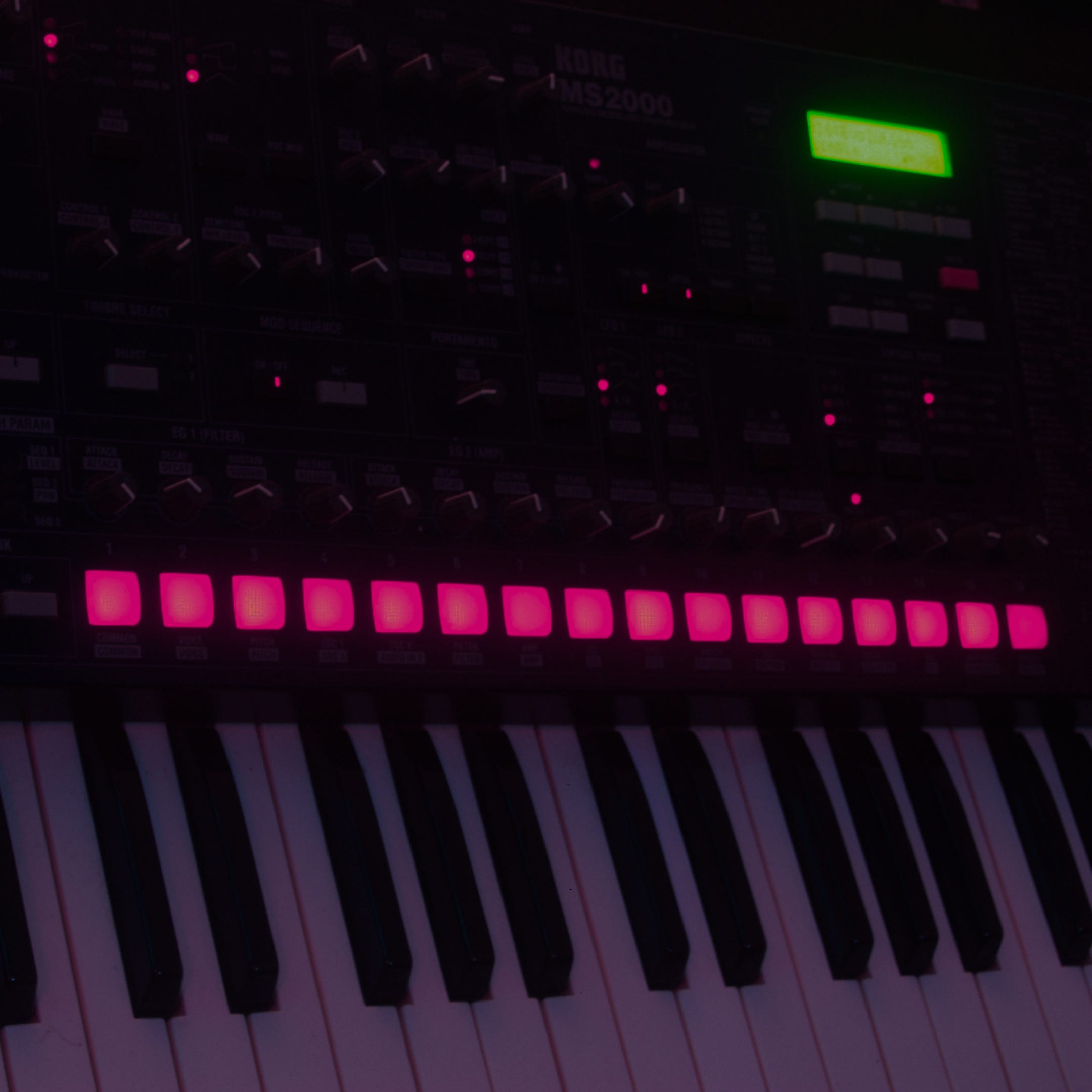
The MS2000 occupies an unusual place in Korg’s history.
It wasn’t the company’s most commercially successful virtual analogue synth — in fact, its core engine would achieve far greater recognition in a different shell. In 2002, Korg repackaged much of the same architecture into the MicroKorg: smaller, cheaper, more portable, and ultimately one of the most successful synths ever made. That version became culturally ubiquitous, adopted by indie electronic bands, electroclash producers, blog house acts, bedroom musicians and eventually an entire generation of first-time synth users. The sound became familiar, even if the original instrument behind it often didn’t.
That leaves the MS2000 in a slightly strange position. Arguably the more complete and more immediate instrument, but also the one more likely to be overlooked. With its full-sized control surface, rackmount option and overtly studio-focused design, it felt less like an accessible consumer synth and more like a genuine production tool — something built to sit alongside samplers, mixers and outboard rather than on a beginner’s desk.
Later instruments like the RADIAS and R3 would push Korg’s virtual analogue ideas much further, while software recreations have kept the architecture alive in plugin form. But the original still occupies its own lane.
What the MS2000 represents is a particular branch of early virtual analogue design: less concerned with recreating vintage warmth, more interested in movement, experimentation and digital character. A synth equally comfortable generating acidic basslines, mangling incoming audio, handling vocoder duties or adding strange atmospheric detail around a groove.
And even now, it remains surprisingly accessible. While many early-2000s instruments have been dragged upward by nostalgia, the MS2000 can still often be found for around £300–£400 — remarkably reasonable for a synth with this much character, hands-on control and studio utility.
Across these records, that character is still unmistakable: edgy, restless and just a little unpredictable.
Total 90s
💾 Doing it the old way.
🎛 Machine-made music.
💿 90s–00s era recordings.
Patch in > t90s.net.