
10 tracks – Novation Supernova
Ten records shaped by the Novation Supernova — spanning tech house, progressive house and breakbeat, with traces of trance, dub and early UK electronics (1999–2005).

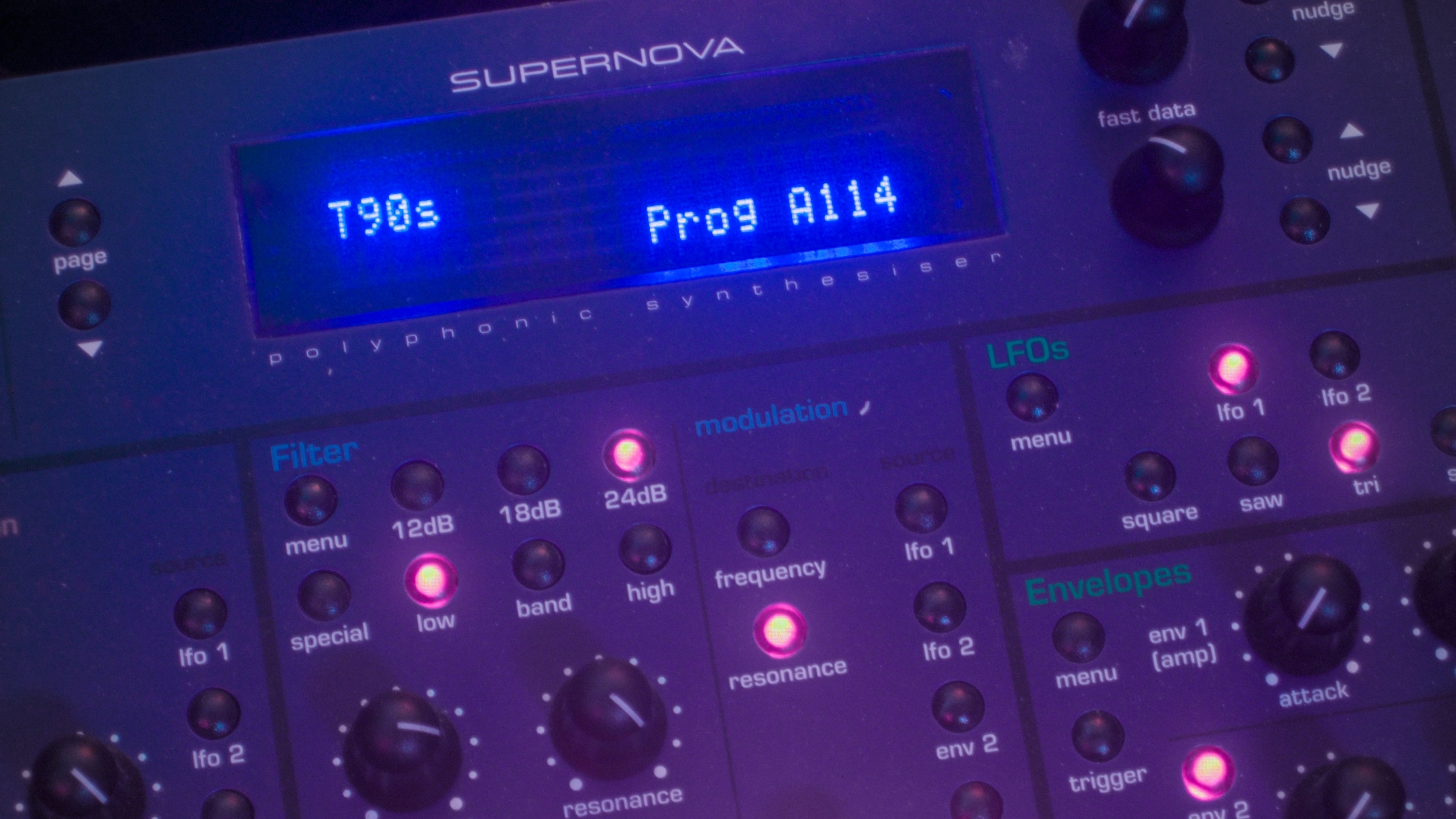
By the late 1990s, synthesis was shifting again.
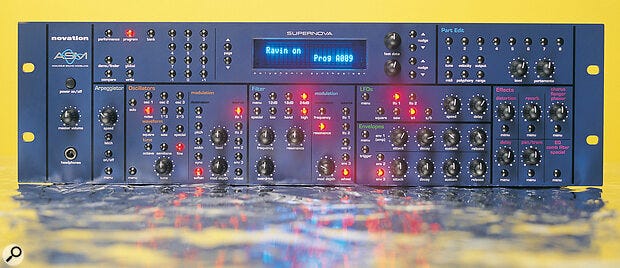
Analogue had already been replaced by digital in many studios, but early digital instruments often lacked immediacy — menu-heavy, static, and harder to shape in real time. A new generation of virtual analogue synths began to change that. Alongside units like the Access Virus, Nord Lead, Roland JP-8000, Yamaha AN1x and Korg Prophecy, Novation’s Supernova — released in 1998 — marked the company’s first move into virtual analogue (ASM) synthesis, building on earlier designs like the Bass Station and Drum Station.
Available in both keyboard and 3U rack formats, and later expanded with the Supernova II, it combined eight-part multitimbrality with eight individual outputs, allowing entire tracks to be built and mixed from a single unit — bass, chords, leads and effects all running simultaneously through separate channels. Compared to many of its competitors, it offered greater polyphony and flexibility, making it especially well suited to multi-layered, hardware-based setups.
At its core was Novation’s virtual analogue engine, shaped by their distinctive “liquid” filter — smooth, responsive and capable of both subtle movement and more aggressive tones. But just as important was its internal processing. Each part had access to multiple effects — delay, reverb, chorus, distortion and more — with flexible routing that allowed chains to be built directly inside the unit, without compromising performance. At a time when most synths treated effects as secondary, the Supernova’s processing became a defining part of its sound.
A powerful modulation matrix pushed this further, making it easy to animate sounds over time — from gentle movement in pads to more extreme sweeps, risers and FX textures. Combined with a large, highly usable preset library, it became a genuine go-to instrument. If it wasn’t handling basslines, leads or chords, it was often filling in the gaps — transitions, textures and background detail. It was also used across a wide range of productions, from more commercial acts like ATB and Jean-Michel Jarre to deeper, hardware-led artists working further underground.
Crucially, it was immediate. Knob-per-function control, stable tuning and relatively low cost made it a practical alternative to older analogue systems and less intuitive digital gear. In setups built around samplers and mixers, it often became the central synth — not because it dominated the sound, but because it could do multiple jobs at once.
Across these tracks, that role is clear: not a defining signature, but a constant presence — adding depth, movement and cohesion within the mix.
Here are 10 tracks released between 1999 and 2005 shaped by the sound and use of the Novation Supernova.
1️⃣ Distant Strangers - Do Anything [DS 001]
📅 Year: 2003
🇬🇧 Country: UK
📀 Label: Distant Strangers
📦 Collection: Have 131 · Want 832
💰 Market: Median £30 · Low £13 · High £150
🔗 Release: Distant Strangers – Untitled
💬 Notes:
Deep, dubbed-out tech house from Daniel Poli and Rob Pearson as Distant Strangers, likely recorded at Pearson’s Online Studios where a Supernova was in the rack. A tight three-note bassline and dusty sampled drums carry the groove, with filtered chord stabs adding movement. The eerie pad that emerges around the four-minute mark is the standout — subtle, but a clear example of the Supernova adding texture without pulling focus from the track’s rolling foundation.
2️⃣ Box Clever - I’ll Eat You (If You Were A Box) [LHB 020]
📅 Year: 2004
🇬🇧 Country: UK
📀 Label: London Housing Benefit
📦 Collection: Have 131 · Want 458
💰 Market: Median £13 · Low £2 · High £60
🔗 Release: Box Clever (2) – Box Clever
💬 Notes:
Heads-down tribal tech house from Richard Grey and Gideon Jackson as Box Clever on London Housing Benefit. Crisp hats, weighty kick and a tightly programmed bassline drive the track, while vocal chops and echo tails handle most of the space. Underneath, the Supernova comes through in bubbling synth swells and background textures — small details that keep the track moving without disrupting its stripped, functional feel.
3️⃣ Rob & Si - Roll One Up [EVA009]
📅 Year: 2003
🇬🇧 Country: UK
📀 Label: Evasive Records
📦 Collection: Have 154 · Want 1177
💰 Market: Median £32 · Low £3 · High £74
🔗 Release: Rob & Si – Roll One Up
💬 Notes:
Rob Pearson and Simon Copleston as Rob & Si, recorded at Online Studios with a Supernova in constant use. Clean sampled drums and a tight sub underpin lush chords, sultry vocals and a mix of melodic detail. The Supernova moves across both ends of its range here — soft pads and atmospheric textures alongside a heavier lead — filling out the low-mids and high-mids while adding just enough variation to keep the groove evolving.
4️⃣ Landmine - Two Lumps, One Sugar! [OBL12003]
📅 Year: 2000
🇬🇧 Country: UK
📀 Label: Oblong Records
📦 Collection: Have 429 · Want 782
💰 Market: Median £13 · Low £3 · High £35
🔗 Release: Landmine – Two Lumps, One Sugar!
💬 Notes:
Breakbeat-leaning tech house from Matthew Benjamin and Lewis Copeland as Landmine, recorded at Plank Studios where Layo & Bushwacka! had a Supernova keyboard. E-MU breaks, conga-driven percussion and a plucked bassline set the tone, with vocoder vocals adding character. The Supernova appears in glassy synth falls, arps and filtered chord work — particularly in the later sections where that liquid filter sound becomes more pronounced.
10 tracks – E-MU Emulator
·From the original Emulator II and Emax through to the Ultra-series workhorses like the E6400 and E-Series Platinum, E-MU samplers played a defining role in 90s and early-00s electronic music.

5️⃣ Blue Wig - No Ignorance (Part 1) [ES006]
📅 Year: 2001
🇬🇧 Country: UK
📀 Label: Eye 4 Sound
📦 Collection: Have 374 · Want 749
💰 Market: Median £22 · Low £11 · High £41
🔗 Release: Blue Wig – No Ignorance
💬 Notes:
Gideon Jackson and Terry Francis as Blue Wig, delivering a stripped, heads-down tech house cut. Filtered Akai drums, a brooding bassline and spoken word vocals lay the groundwork before a darker pad and acid line take over. The Supernova sits in that pad, adding width and depth, while its smooth filter movement helps the sound evolve subtly over time — reinforcing the track’s hypnotic, locked-in groove rather than distracting from it.
10 tracks – Akai S-Series
·Released between 1985 and 1999, the Akai S-Series were rack-mount digital samplers featuring 12- and 16-bit converters, analogue-style filters and floppy-disk storage — developed alongside Akai’s better-known MPC range.

6️⃣ Mashupheadz - Monster Mash [plank012]
📅 Year: 1999
🇬🇧 Country: UK
📀 Label: Plank Records
📦 Collection: Have 309 · Want 716
💰 Market: Median £16 · Low £4 · High £35
🔗 Release: Mashupheadz – Magic Potion
💬 Notes:
Matthew Benjamin and Nathan Coles as Mashupheadz, recorded at Plank Studios. Breaks, layered samples and scattered vocal hits drive the opening before the track shifts into a more rolling, groove-led structure. As it opens out, the Supernova comes forward in the melodic layers — soft, drifting synth lines that contrast with the tougher drums, adding space and colour while maintaining the track’s underlying weight.
7️⃣ BT’s Hair - Does This Track Make My Butt Look Big ? (Rob Pearson Remix) [Wrong 010]
📅 Year: 2004
🇬🇧 Country: UK
📀 Label: Wrong
📦 Collection: Have 161 · Want 516
💰 Market: Median £16 · Low £3 · High £66
🔗 Release: BT’s Hair – Does This Track Make My Butt Look Big ?
💬 Notes:
Rob Pearson’s remix for Nathan Coles and Asad Rizvi’s Wrong imprint, again out of Online Studios. Heavy conga-driven drums, vocal hooks and a subby bassline lock in the groove, while filtered chords handle the dub space. The Supernova sits across the upper layers — FX sweeps, pads and subtle melodic fragments — adding movement and detail that keeps the track shifting without interrupting its tight, rolling structure.
8️⃣ Nathan Scott & Gideon Jackson - Like A Rush [DOPECOTTAGE 002]
📅 Year: 2003
🇬🇧 Country: UK
📀 Label: Dope Cottage Recordings
📦 Collection: Have 103 · Want 289
💰 Market: Median £20 · Low £3 · High £39
🔗 Release: Nathan Scott & Gideon Jackson – Like A Rush / Ow Dat Sound
💬 Notes:
Techno-leaning tech house from Nathan Scott and Gideon Jackson. Punchy TR-909 drums and a cavernous bassline drive the track, with the vocal hook cutting through the mix. As it develops, a washed, progressive-leaning pad comes in — a sound the Supernova excels at — gradually opening the track up before a simple lead line pushes it into a more direct, peak-time space.
10 tracks – Roland TR-909
·Released in 1983, the Roland TR-909 was a hybrid drum machine that paired analogue circuitry with early digital sampling — a combination that made its tone punchy, gritty, and unmistakably alive.

9️⃣ Terry Francis & Giddy Jackson - Blue Wig [WIG009]
📅 Year: 1999
🇬🇧 Country: UK
📀 Label: Wiggle
📦 Collection: Have 281 · Want 1491
💰 Market: Median £24 · Low £10· High £40
🔗 Release: Terry Francis & Giddy Jackson* – Blue Wig / Looking
💬 Notes:
Terry Francis and Gideon Jackson on Wiggle, engineered by Matthew Bushwacka!. Bongo-driven rhythms and pitched hats build steadily before melodic elements take over. The Supernova’s liquid filter is central here — shaping the acid-tinged sounds and filling out the low-mid range — while additional leads and textures layer in to give the track its distinctive, slightly alien character.
🔟 It’s Thinking - Afterglow (Bushwacka Remix) [EC 037]
📅 Year: 2000
🇳🇱 Country: Netherlands
📀 Label: EC Records
📦 Collection: Have 447 · Want 1194
💰 Market: Median £17 · Low £10 · High £37
🔗 Release: It’s Thinking – Afterglow
💬 Notes:
Bushwacka’s remix of the 1992 dream house track Afterglow, originally by It’s Thinking, reworking the parts rather than sampling them directly. Tight breaks and acid hits sit beneath a soft, melodic lead, likely recreated on synths like the Supernova. Midway through, the track shifts into a jazz-influenced, sample-led section before returning to the main theme, making it a flexible and effective late-night closer. “It’s Thinking” later appeared as SEGA Dreamcast’s slogan — likely coincidence, but a neat crossover.
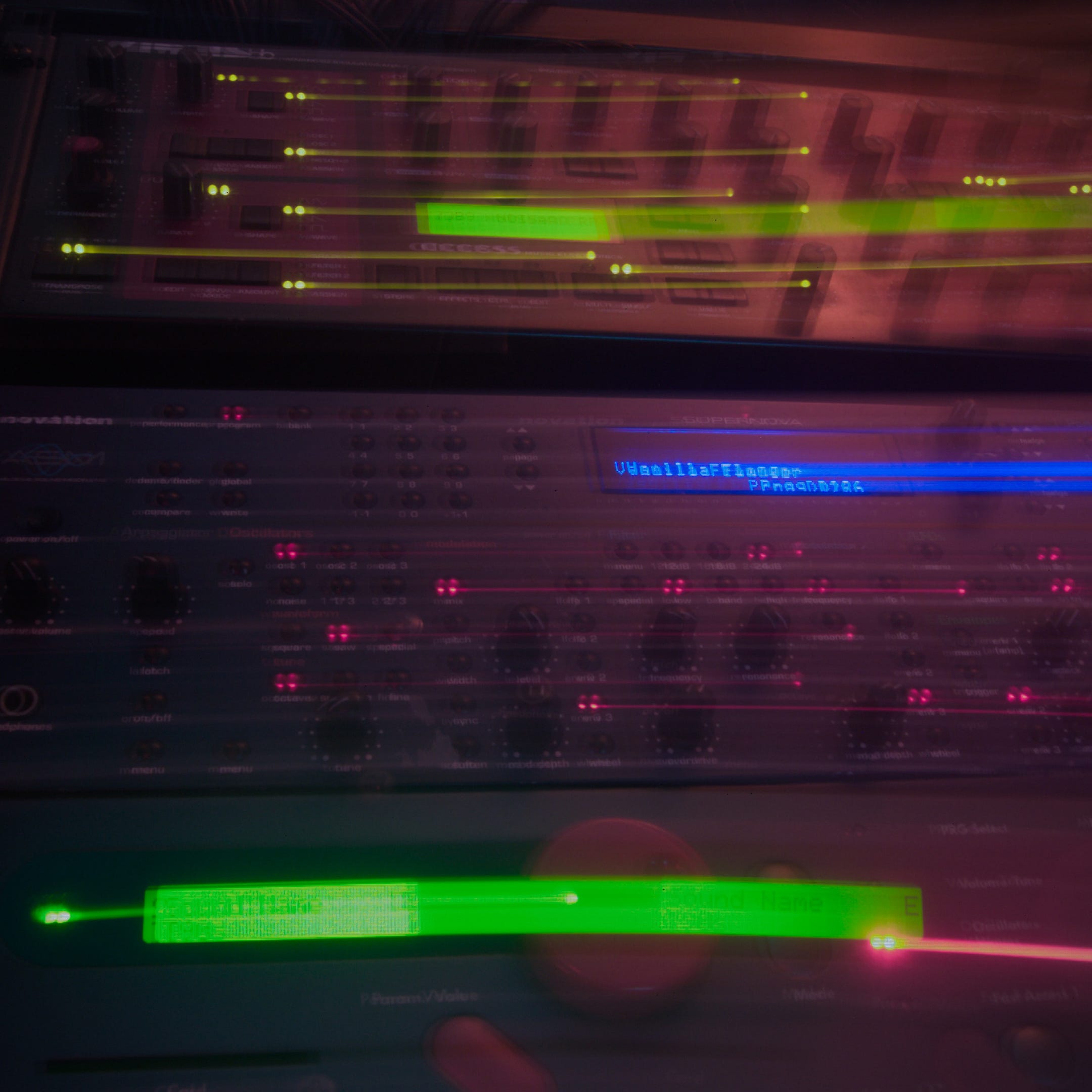
Like much of Novation’s early hardware, the Supernova sat at the intersection of accessibility and capability.
It wasn’t the first virtual analogue synth, nor the most technically advanced, but it was one of the most usable. Its combination of multitimbrality, onboard effects, modulation and hands-on control made it less a single instrument and more a complete production tool — capable of handling bass, chords, leads and effects within the same unit.
That approach carried forward. The Supernova II expanded the architecture, while later instruments like the Nova, V-Station and A-Station translated it into smaller formats and software. More recent synths such as the Ultranova, Peak and Summit continue that same balance between immediacy and flexibility. Today, Novation operates as part of Focusrite Group in High Wycombe, but the core idea remains consistent: powerful synthesis, made immediate.
What the Supernova represents is less about a single sound and more about a way of working. A synth that could sit across an entire track — not just generating parts, but shaping how they interact. A real Swiss army knife in hardware form.
And even now, it remains accessible — still regularly available for around £300–£400, a reminder of how much capability was packed into a single unit.
Across these records, that role is still audible: a source of movement, colour and structure within otherwise sample-driven productions.
Total 90s
💾 Doing it the old way.
🎛 Machine-made music.
💿 90s–00s era recordings.
Patch in > t90s.net.