
5 tracks – Manchester
Five records from Manchester, spanning deep house, tech house and electro — shaped by the city’s network of labels, studios and underground spaces (1997–2002).

Across the late 80s, 90s and early 00s, Manchester developed one of the UK’s most interconnected underground music ecosystems — built from record shops, independent labels, pirate radio, studios and repurposed industrial spaces spread across the city.
The Hacienda and Factory Records helped establish Manchester’s global mythology, but much of the city’s underground infrastructure existed elsewhere: Eastern Bloc, Vinyl Exchange and Piccadilly Records importing US house, techno and electro into the North; studios and small labels operating from red-brick warehouses and back rooms across the Northern Quarter and Salford.
Artists like 808 State, A Guy Called Gerald and Future Sound of London emerged from that environment, where Chicago house, Detroit techno, electro, indie, dub and rave culture constantly overlapped. Even visiting US artists became part of the city’s story — Marshall Jefferson famously relocating to Manchester during the Hacienda era as the lines between local and imported dance music culture blurred further.
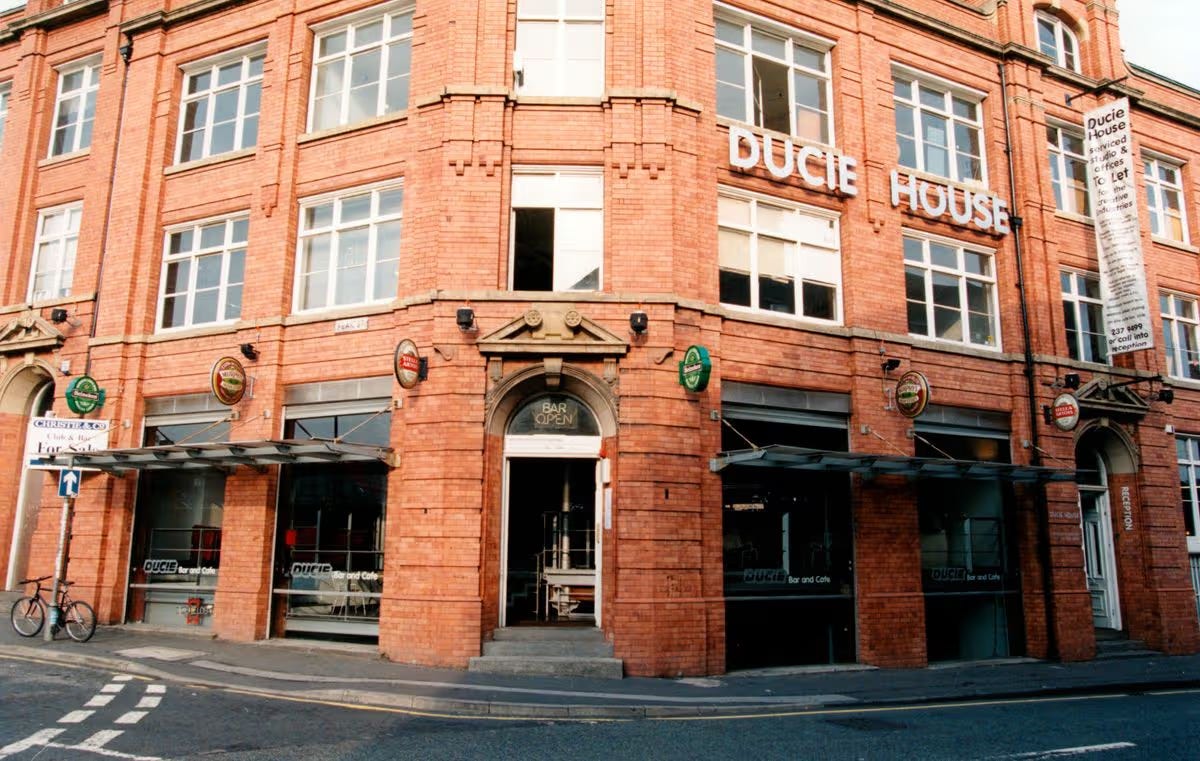
By the late 90s and early 00s, that same crossover mentality still shaped the city’s underground output. Deep house, tech house, progressive and electro all coexisted within a loose network of labels, studios and shared creative spaces. One of the key hubs was Ducie House in the Northern Quarter — home to recording studios, independent labels, designers, cafés, bars and club nights throughout the period.
Manchester’s sound rarely belonged to one genre for long. The city’s producers pulled freely from US house, Detroit techno, disco, dub, post-punk and machine funk, shaping records that felt less tied to scenes and more tied to shared infrastructure, hardware workflows and late-night studio culture.
This week’s 5 Tracks looks at five records connected to that Manchester ecosystem.
1️⃣ City People - Let It Rain (Dub) [RCM0004]
📅 Year: 1997
🇬🇧 Country: UK
🏷️ Label: Rainy City Music
📦 Collection: Have 370 · Want 974
💰 Market: Median £25 · Low £9 · High £75
🔗 Release: Various – When It Rains It Pours
💬 Notes:
Manchester duo City People — Cyril Lyons and Irfan Hussain — on Rainy City Music, named after Manchester’s long-standing “Rainy City” nickname. Built around sampled TR-909 drums programmed via MPC60, the track combines dubbed-out percussion, glassy chord stabs and smoky vocal fragments with a loose, groove-led swing. The Rainy City crew bought their MPC60 on the advice of fellow Manchester artist A Guy Called Gerald, who had originally been introduced to the machine by Joe Smooth. Like much of the label’s output, it sits somewhere between deep house, dub and UK street soul — warm, understated and heavily atmosphere-driven.
2️⃣ Salt City Orchestra - Attack Of The Crab Monsters [PAP 020]
📅 Year: 1998
🇬🇧 Country: UK
🏷️ Label: Paper Recordings
📦 Collection: Have 668 · Want 560
💰 Market: Median £7 · Low £1 · High £20
🔗 Release: Salt City Orchestra – Book Ends
💬 Notes:
Salt City Orchestra — Elliot Eastwick, Miles Hollway and Simon Bradshaw — for Manchester’s Paper Recordings. Recorded at Si Bradshaw’s Payback Studios in Manchester, it pairs dusty sampled drums and Korg M1 bass with jazzy chords, strings and chopped vocal hooks. Like much of the Paper catalogue, it draws heavily from US deep house and disco sampling traditions, but with a looser, more swung groove that became closely associated with Manchester’s late-90s sound. Warm, musical and groove-led, it reflects the city’s crossover between deep house, sampling culture and after-hours club music during the period.
10 tracks – Korg M1
·Released in 1988, the Korg M1 was a 16-voice digital synthesiser and workstation that combined sampled waveforms with subtractive synthesis — a hybrid that made it both versatile and instantly recognisable.

3️⃣ D Ball - Slack [OUR001]
📅 Year: 2002
🇬🇧 Country: UK
🏷️ Label: Ourtime Music
📦 Collection: Have 225 · Want 1460
💰 Market: Median £43 · Low £18 · High £150
🔗 Release: D Ball – Slack
💬 Notes:
Late Manchester artist Dave Ball for Manchester/Salford label Ourtime Music. Slack sits between deep house, disco and Detroit-influenced techno — shuffled drums, lo-fi textures and machine-led funk holding the groove together while synth washes and filtered basslines slowly evolve around it. Like much of the Ourtime catalogue, it balances deep atmosphere with functional dancefloor programming, reflecting the crossover between house and techno present across Manchester during the period. Deep but still driving, it captures the hazy, after-hours side of the city’s underground sound.
4️⃣ Carl A. Finlow - Hardwired [IRQ02]
📅 Year: 2001
🇬🇧 Country: UK
🏷️ Label: Device
📦 Collection: Have 366 · Want 1091
💰 Market: Median £51 · Low £33 · High £86
🔗 Release: Carl A. Finlow – Electrilogy : Part 1
💬 Notes:
Leeds producer Carl Finlow on Manchester electro label Device. Built from TR-606 drums, warped electronics, vinyl scratch textures and washed-out analogue chords, Hardwired reflects the crossover between Northern electro, techno and groove-led machine music during the early 2000s. Like much of Finlow’s work from the period, it combines precise drum programming and futuristic sound design with enough swing and rhythmic looseness to work comfortably alongside house records. Mechanical but still funky, it sits firmly between electro functionality and club-focused dancefloor music.
5️⃣ Christian West - Rotation (Dub Mix) [FLR021]
📅 Year: 2000
🇬🇧 Country: UK
🏷️ Label: Fluid Recordings
📦 Collection: Have 394 · Want 169
💰 Market: Median £5 · Low £1 · High £19
🔗 Release: Christian West – Rotation
💬 Notes:
Christian West for Manchester progressive and tech house label Fluid Recordings. Released during the period when both Fluid and Device operated out of Ducie House in Manchester’s Northern Quarter, the track leans into stripped tribal drums, sustained synth basslines and gradual arrangement changes typical of early-00s tech house. Like much of the deeper progressive and tech house coming out of Manchester at the time, it relies on subtle movement, tension and system-focused arrangement rather than obvious hooks or breakdowns. Restrained and functional, it reflects the slower-burning side of the city’s club sound.
Total 90s
💾 Doing it the old way.
🎛 Machine-made music.
💿 90s–00s recordings.
Patch in > t90s.net.